


1. Introduction
2. Materials and Methods
Data collection
Data processing and analytical methods
3. Results and Discussion
Basic statistics
Publication analysis by country
Publication analysis by institution
Analysis of research topics
Policy milestones and ocean-dumping research evolution
4. Conclusion
Key findings and evidence-based implications
Scope and limitations
1. Introduction
The London Convention (LC), adopted in 1972, is an international agreement aimed at protecting marine ecosystems and promoting the sustainable use of oceans that was established to regulate the ocean disposal of waste originating from land-based sources and the deliberate disposal of waste or other materials from ships, aircraft, marine platforms, and other artificial marine structures (IMO 2016). To overcome the LC’s substance-by-substance approach, the London Protocol (LP) codifies the precautionary and polluter-pays principles. Introduced in 1996, the LP prohibits all dumping except for eight categories listed in its Annex 1 “reverse list”: (1) dredged material, (2) sewage sludge, (3) fish waste, (4) vessels and other marine structures, (5) inert uncontaminated geological material, (6) naturally occurring organic material, (7) bulky items primarily composed of iron, steel or concrete, and (8) carbon-dioxide streams from carbon-capture and storage projects (IMO 2016). Together, the LC/LP form the longest-running global framework for controlling contaminant fluxes to the ocean and now address emerging issues, such as carbon capture and storage (CCS) and marine geoengineering, including ocean fertilization (Clarke et al. 2022; Birchenough and Haag 2020; Hong and Lee 2015).
Against this regulatory backdrop, the present study maps the macro-level structure of ocean-dumping research andexamines whether major LC/LP policy milestones have systematically steered both the volume and thematic orientation of the research. We test the expectation that landmark amendments, such as the adoption of the LP, the decision to permit sub-seabed CCS, and subsequent provisions on marine geoengineering, correspond to notable increases in publication output and the emergence of new research themes.
The 2030 Agenda for Sustainable Development adopted by the United Nations in 2015 consists of 17 goals, with SDG 14 “Life Below Water” calling for the conservation and sustainable use of the oceans. The establishment of this agenda along with the LC/LP Strategic Plan and the first periodic review of this Strategic Plan in 2022 have further strengthened the institutional and practical implementation foundation of LC/LP governance (IMO 2024). LC/LP governance has adapted flexibly to evolving global environmental concerns, thereby solidifying its institutional foundation. Correspondingly, scholarly output has grown significantly over the past decades.
Growing global concern over emerging issues such as plastic pollution and microplastics has led to the noticeable intensification of research activity in those areas (Agamuthu et al. 2019; Zhang et al. 2020; Tomojiri et al. 2022). To understand this extensive knowledge base systematically, a scientometric approach that analyzes research trends and structures from a macro perspective is necessary. Bibliometric analyses quantitatively examine the literature published in specific fields to identify emerging research themes, scholarly collaboration network formation, and knowledge structure changes (Donthu et al. 2021). Unlike qualitative literature reviews, which may reflect researcher bias, bibliometric analyses allow for the objective identification of temporal trends based on accumulated data and are widely utilized for strategic planning and policy discussions across various fields.
To date, bibliometric studies on ocean dumping have mostly focused on limited waste types such as plastic debris and marine litter (Zhang et al. 2020; Kasavan et al. 2021; Tomojiri et al. 2022; Mishra et al. 2024), and comprehensive analyses covering broader ocean-dumping issues within a governance context are scarce. Related scientometric research has been applied in adjacent domains - for instance, Quan and Jin (2024) reviewed marine environmental governance literature, and other studies have examined environmental policy trends using bibliometric methods - but none have specifically addressed the LC/LP ocean-dumping regime. Thus, this study aimed to perform a comprehensive bibliometric analysis of ocean dumping research within the context of international regulations, with a particular focus on LC and LP. Utilizing relevant international academic papers collected from the Web of Science Core Collection (Clarivate), this study conducts a multidimensional analysis of research trends (by year), productivity, collaboration patterns at national and institutional levels, and keyword co-occurrence network and thematic cluster formation. This study seeks to examine the scholarly structure and policy connections within the ocean dumping field and provide insights into future directions of LC/LP-based international governance.
2. Materials and Methods
Data collection
Data for analyzing research trends related to ocean dumping were collected from the Web of Science Core Collection (Clarivate) on March 25, 2025 (Table 1). The search encompassed all papers published from 1900 onwards, with journal indexing limited to the Science Citation Index Expanded (SCIE) and Social Sciences Citation Index (SSCI). Document types were restricted to original articles and reviews written in English. The search query combined ocean-related terms (ocean, marine, sea, and coastal) with dumping-related terms (dumping and disposal), and included papers closely related to the LC and LP. Specifically, the search comprehensively captured papers using explicit terms, such as “ocean dumping” and “marine disposal,” as well as papers in which ocean- and dumping-related terms appeared in close proximity within titles, abstracts, and author keywords. This procedure yielded 1,542 papers. Subsequently, a detailed review of titles, abstracts, and author keywords was conducted to select only those that explicitly addressed ocean dumping, producing a final dataset of 865 papers.
Table 1.
Parameters and search queries used for data collection on ocean dumping-related research
Data processing and analytical methods
The analysis involved basic statistical computation, keyword pre-processing, co-occurrence matrix construction, network centrality, and cluster analysis as follows:
1) A basic statistical analysis was conducted on the collected papers to understand general research trends. This involved calculating the distribution of papers by journal indexing type and computing the mean, minimum, and maximum numbers of participating countries, institutions, and authors per paper. Annual publication counts were compiled and visualized to assess quantitative research growth trends.
2) Country and institutional information were extracted from author affiliations. Standardization procedures were applied to ensure consistency, owing to variations in how countries or institutions were named. Author keywords were used for research topic analyses, resulting in 1,993 identified keywords. Keywords with identical meanings were consolidated into representative terms, considering synonyms, acronyms, full forms, singular and plural forms, capitalization variations, and different notations. For example, varying notations such as “1996 London Protocol,” “LP,” and “London Protocol” were unified under a single representative term.
3) Research collaboration was analyzed by constructing binary matrices representing country-by-country and institution-by-institution relationships based on co- authorship data. These matrices serve as foundational data for network analysis and are useful for identifying collaboration intensity and structure among countries and institutions. Additionally, keyword co-occurrence frequencies were used to generate keyword-by-keyword matrices to analyze thematic relationships. Network centrality analyses were conducted separately for countries, institutions, and keywords, employing centrality metrics including degree, closeness, and betweenness. Degree centrality measures direct connections to other nodes, indicating direct influence. Closeness centrality represents the average shortest path distance to all other nodes, indicating the ease of reaching other nodes. Betweenness centrality indicates the frequency with which a node appears on the shortest paths between other nodes, identifying key mediators within the network (Freeman 1978; Lee et al. 2022).
4) Cluster analyses were performed on each network (country, institution, and keywords) using the Louvain algorithm (Blondel et al. 2008), effective in naturally grouping nodes with similar connection patterns. Clusters identified through this process were visualized using Gephi software. Node sizes were proportional to keyword occurrence frequency, and edge thickness represented keyword co-occurrence frequencies. Nodes within the same cluster were indicated by the same color, facilitating an intuitive understanding of the structure of each cluster and central keywords.
3. Results and Discussion
Basic statistics
The dataset analyzed in this study consisted of 865 papers published between 1953 and 2024, with 797 indexed in the SCIE and 84 in the SSCI. Researchers from 66 countries and 594 institutions have conducted studies on ocean dumping. Regarding collaborative research, the average number of participating countries per paper was 1.3, ranging from a minimum of 1 to a maximum of 10. Institutions participated with an average of 2.3 per paper, ranging from 1 to 14, and the average number of authors per paper was 3.6, ranging from 1 to 27 (Table 2).
Table 2.
Descriptive statistics of ocean dumping-related research and collaboration metrics
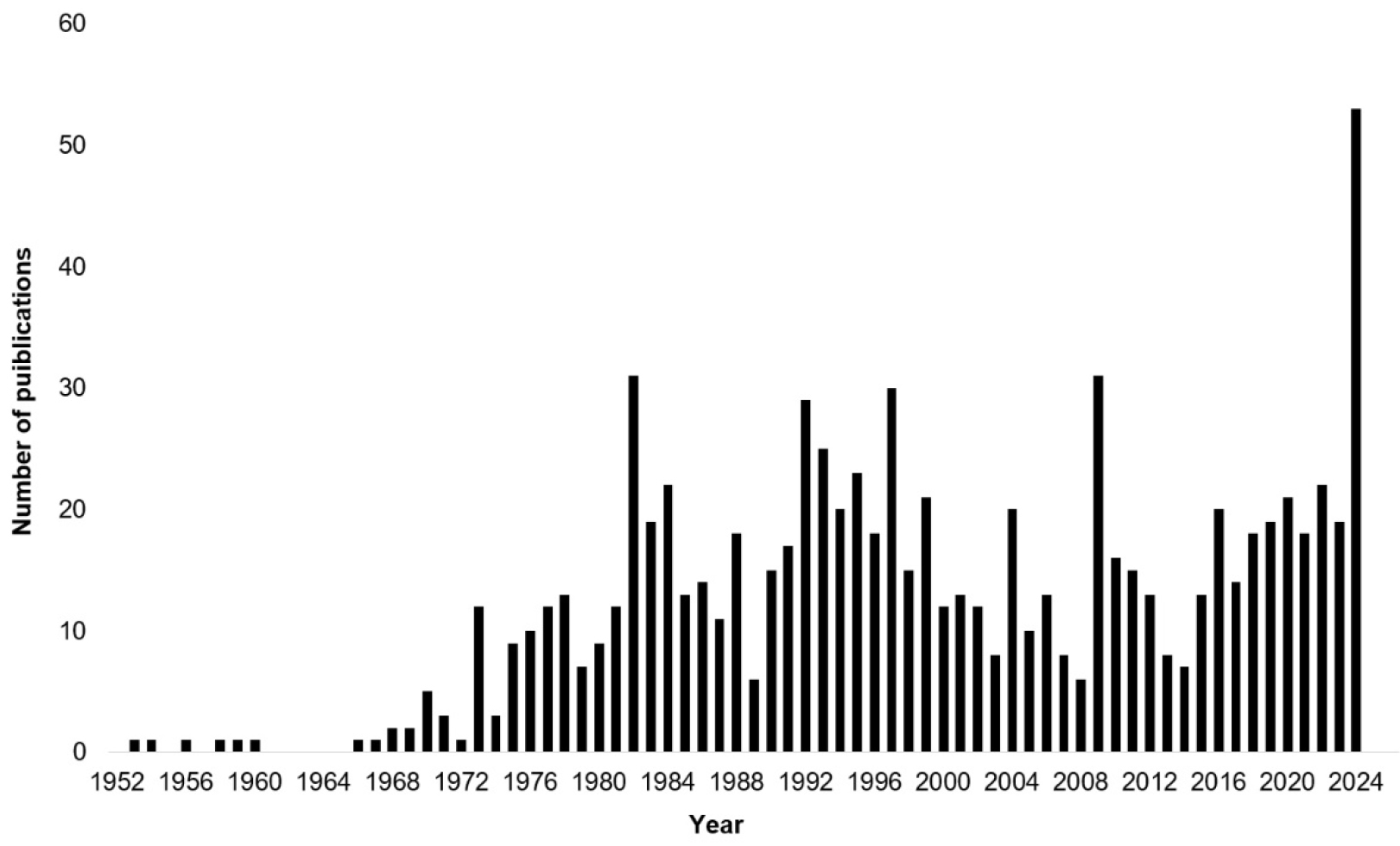
Publications on ocean dumping appeared sporadically in the 1950s and began increasing steadily around the mid- 1970s, with ~10 papers published annually. This period marked the establishment of ocean dumping as a recognized research field. A rapid increase occurred in the early 1980s, coinciding with heightened global concern around marine pollution, and with the 1972 LC notably influencing both policy and academic research. The 1990s saw relatively stable publication trends, the 2000s experienced moderate fluctuations, and from 2009 there was a sharp increase to 31 papers published. Since 2020, ~20 papers have been consistently published per year, with a peak of 53 in 2024, driven by a special issue commemorating the 50th anniversary of the LC and the Stockholm Declaration in the International Journal of Marine and Coastal Law. Historically, other increases in publication counts have corresponded to special issues in specific academic journals (Fig. 1).
Publication analysis by country
An analysis of author affiliations by country shows that the United States (U.S.) published the most papers on ocean dumping, totaling 191 (23.6%), followed by the United Kingdom (U.K.) (89, 11.0%), Japan (50, 6.2%), Germany (34, 4.2%), Canada (34, 4.2%), China (30, 3.7%), and South Korea (29, 3.6%). Similar trends emerged when only the corresponding authors were considered, with the U.S. leading with 184 papers (25.0%), followed by the U.K. (112, 15.2%), Japan (55, 7.5%), Canada (28, 3.8%), Germany (28, 3.8%), South Korea (26, 3.5%), and China (26, 3.5%) (Table 3).
Table 3.
Top 20 countries by number of publications related to ocean dumping: A comparison of all authors and corresponding authors
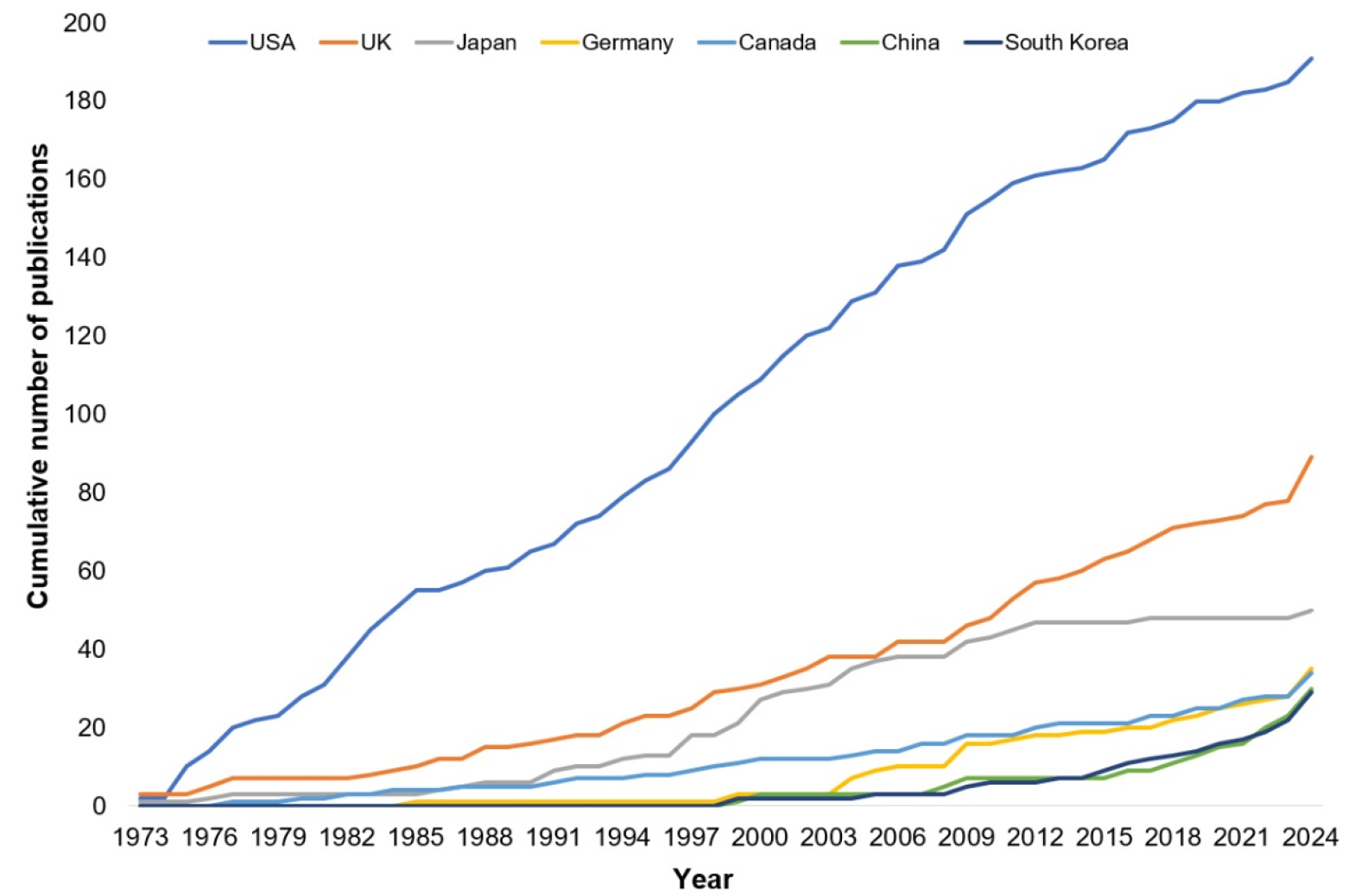
The cumulative publication trends of the top ten countries over time displayed clear growth patterns (Fig. 2). The U.S. has shown rapid growth in publications since the 1980s and continues to lead in research output. The U.K. has maintained a steady growth rate. Japan began research earlier than other East Asian countries, showing gradual increases until around the 2000s but demonstrating a recent plateau in activity. Germany and Canada have exhibited steady growth since the 2000s, whereas China and South Korea have shown marked increases in research output since the mid-2000s. Australia and Norway have maintained steady increases, and Spain has notably increased its research activity since the early 2000s.
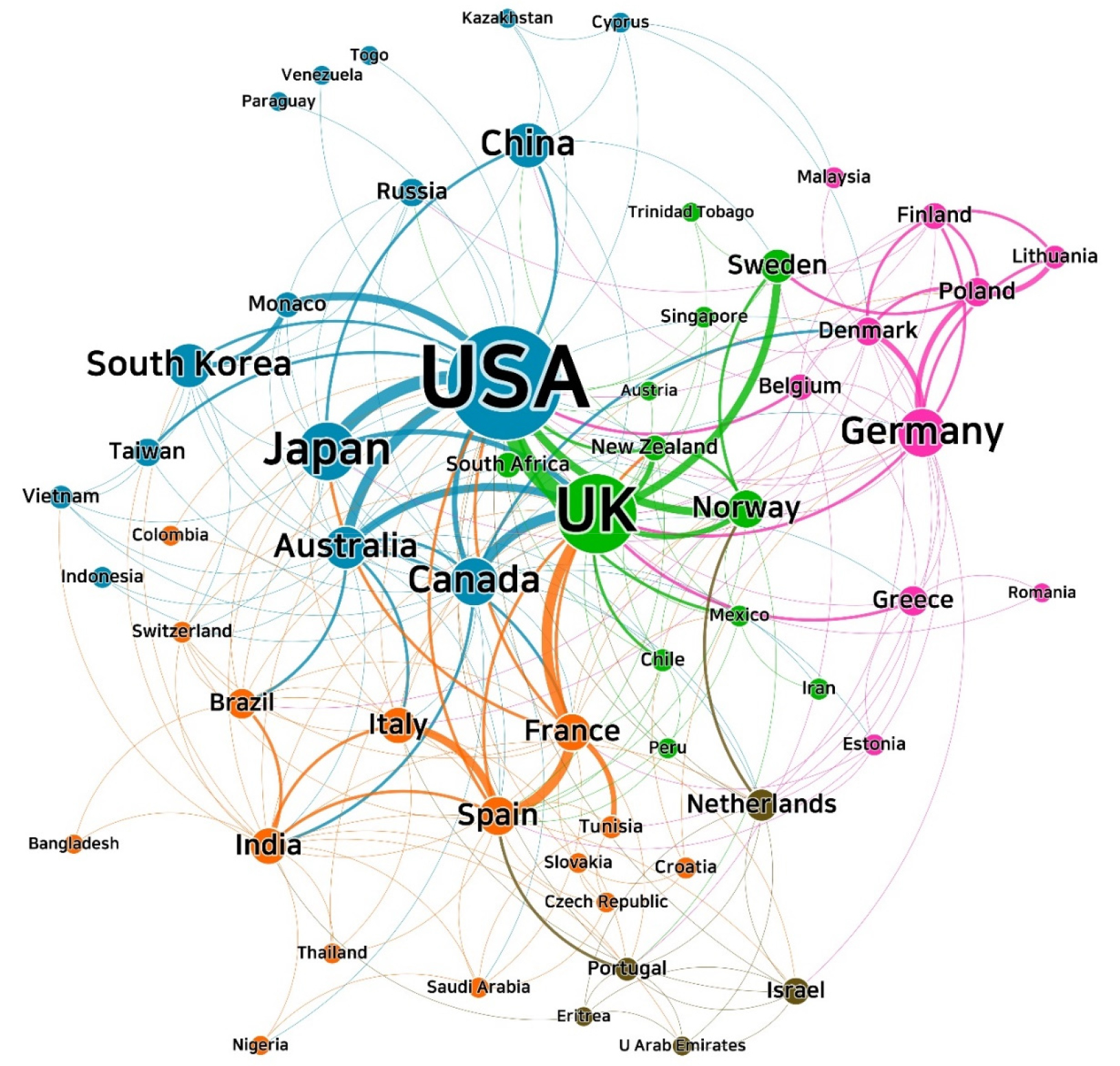
A co-authorship analysis of ocean dumping-related research indicated that the highest number of collaborative studies occurred between the U.S. and the U.K. (eight papers), reflecting their key roles in implementing LC/LP. The U.S. also engaged in collaborative research with Japan (six papers), Australia (five papers), and Monaco and Norway (four papers each). However, relative to the total output of 191 papers, the proportion of international collaborations by the U.S. was relatively low, suggesting a tendency toward domestically focused research. In contrast, the U.K. actively collaborated with the U.S., Canada, and France (five papers each), as well as with Australia and Sweden (four papers each). Spain frequently collaborated with France (five papers) and Italy (four papers), indicating a regionally concentrated collaboration pattern within Europe.
An analysis of network centrality based on international co-authorship showed that the U.S. had the highest degree of centrality, collaborating with 36 countries (Table 4). It also recorded the highest closeness centrality (0.731), indicating that it maintained the shortest average path length to other countries within the research network. Furthermore, it ranked the highest in betweenness centrality, underscoring its key role as an intermediary in international collaboration networks. The U.K. also ranked highly across all centrality metrics, reflecting its extensive collaboration with other countries. It had the second-highest number of international collaborations after the U.S., with high closeness (0.663) and betweenness centrality (0.145), serving as a major hub, particularly within Europe. Canada also demonstrated relatively high degree (23) and betweenness (0.111) centralities, indicating a strong role in international research partnerships. Although Japan and Germany had the same degree of centrality (17), Germany had a higher betweenness centrality (0.056), suggesting that it played a more active bridging role within the network. In contrast, South Korea and China, despite moderate publication counts, had relatively low degree, closeness, and betweenness centrality values below 0.01. This indicates a more peripheral position in the network, with collaboration concentrated among a limited number of partners.
Table 4.
Centrality metrics of countries in co-authorship networks related to ocean dumping research
Meanwhile, countries such as France, India, and Spain showed notable betweenness centrality values relative to their total publication counts, implying that they served as intermediaries across otherwise less connected nodes. The structure of the international co-authorship network is illustrated in Fig. 3.
Publication analysis by institution
An analysis of institutional productivity and inter- institutional collaboration in ocean dumping research revealed that the leading institutions are evenly distributed across North America, Europe, and Asia with these institutions demonstrating diverse collaboration patterns. While some institutions occupy central positions in the research network and act as hubs or intermediaries, others are more isolated and engage in limited collaborations with only a few partners (Table 5). In terms of the number of publications, the Center for Environment, Fisheries, and Aquaculture Science (CEFAS) in the U.K. produced 22 papers, followed by the Korea Institute of Ocean Science and Technology (KIOST) with 21. The National Oceanic and Atmospheric Administration (NOAA) in the U.S. published 18 papers, the University of California System produced 16 papers, and the U.S. Environmental Protection Agency (EPA) published 15 papers.
Table 5.
Centrality metrics of institutions in co-authorship networks on ocean dumping-related research
An analysis of centrality metrics based on inter- institutional collaboration networks revealed that major U.S. institutions play key roles in terms of connectivity and mediation (Fig. 4). Notably, the University of California System recorded the highest degree centrality (19) and exhibited high values of closeness (0.408) and betweenness (0.173) centralities, indicating its hub-like position within the network owing to active collaborations with various domestic and international institutions. Other prominent U.S. institutions, including NOAA, the Woods Hole Oceanographic Institution (WHOI), and the Scripps Institution of Oceanography (SIO), also showed relatively high betweenness centrality scores, suggesting that they frequently acted as intermediaries within the research network. In contrast, although CEFAS had the highest publication count, it showed only moderate centrality values, implying that its collaborative activities were concentrated in a limited number of institutions or countries.
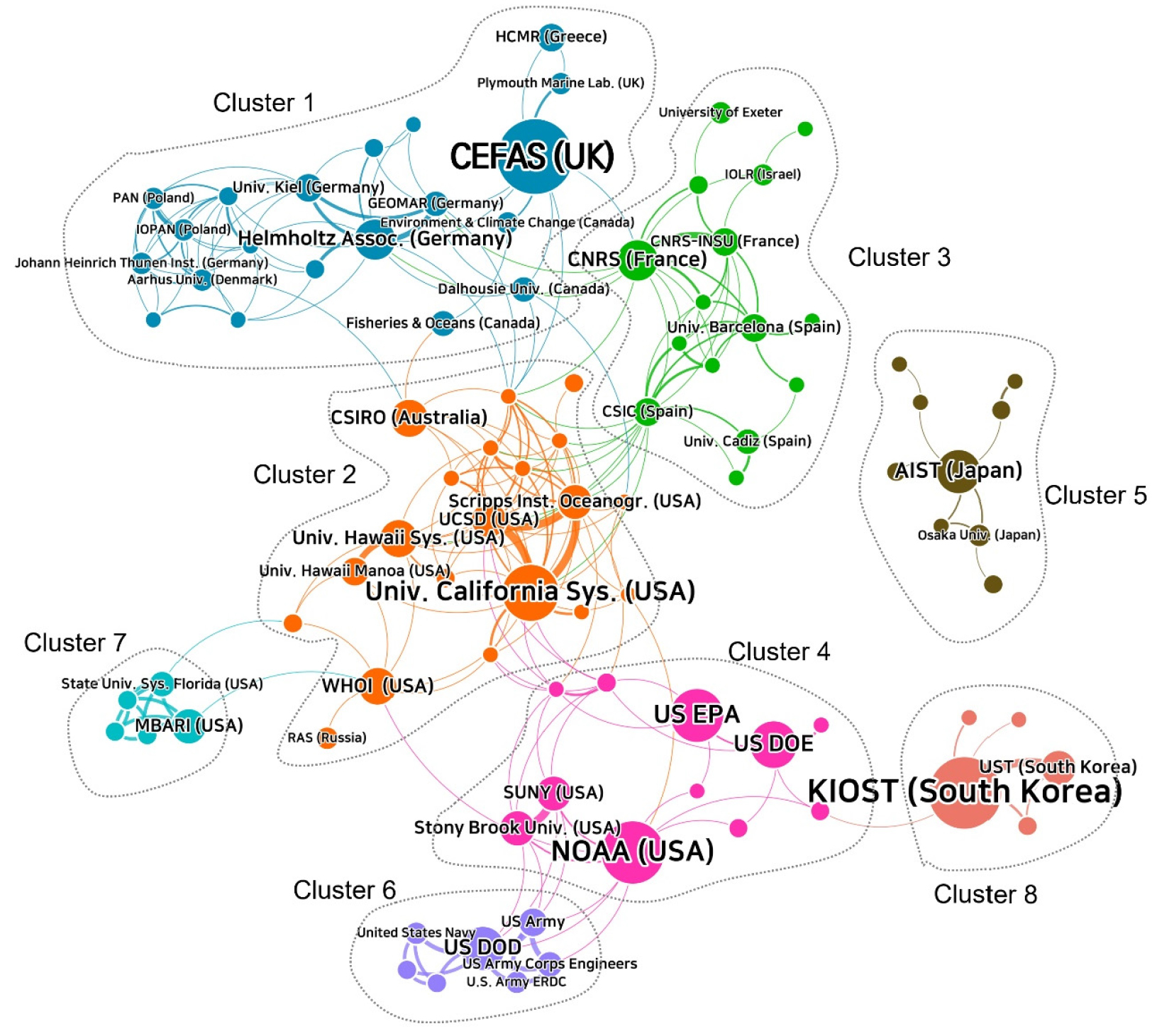
Institutions such as the Helmholtz Association in Germany, the Commonwealth Scientific and Industrial Research Organisation (CSIRO) in Australia, and the French National Centre for Scientific Research (CNRS) demonstrated relatively high betweenness centrality, indicating their central role in facilitating multilateral collaboration in Europe and Oceania (Fig. 4). In particular, the CNRS is notable for its high values in both degree and betweenness centrality, highlighting its strong influence on international research networks. In contrast, KIOST, despite its relatively high publication output, exhibited a lower degree of centrality and was situated further from the center of the network. The betweenness centrality was also relatively low (0.077), indicating limited engagement in broader collaborative activities. Similarly, the National Institute of Advanced Industrial Science and Technology (AIST) in Japan showed extremely low betweenness centrality (0.006), suggesting a closed collaboration structure. However, it recorded a very high closeness centrality (0.727), reflecting strong ties with a small number of domestic partners.
A visualization of the inter-institutional collaboration network revealed eight clusters, with cluster numbers assigned based on cluster size (Fig. 4). Cluster 1 represents a Europe-centered multinational network with extensive connections between major European and North American institutions. Cluster 2 is a North America-centered network characterized by active collaboration with several institutions in Oceania. Cluster 3 is a Southern European network, while Cluster 4 is centered on U.S. federal government agencies, representing an administrative and policy- focused collaboration network. Cluster 5 is an East Asian network which tends to focus on regional rather than international collaboration. Cluster 6 is a closed network centered on U.S. military-related institutions and Cluster 7 is a regionally concentrated group based in the western and southern U.S. Cluster 8 is composed of domestic institutions in South Korea and Pukyong National University, which form a relatively closed network focused on national-level collaborations.
Analysis of research topics
To identify major research themes in ocean dumping, a keyword co-occurrence network and cluster analysis were conducted based on author keywords with five thematic clusters identified (Table 6).
Table 6.
Network centrality and cluster analysis of keywords in ocean dumping-related research. DC: Degree centrality, CC: Closeness centrality, BC: Betweenness centrality
Cluster 1 represents the most traditional research domain in ocean dumping, focusing on pollutant accumulation in sediments and their environmental impacts. This cluster primarily addresses the characterization of pollutants in sediments, dredged material management, detection of heavy metals, and environmental impact assessments. Notably, “sediment” ranked highest in both frequency and centrality metrics, indicating its role as a core concept in the research network. “Heavy metal” and “dredged material” also showed high centrality, reflecting sustained scholarly attention. This cluster encompasses a wide array of studies on chemical pollutant dispersion, monitoring techniques, and legal and regulatory frameworks.
Cluster 2 focuses on international conventions and policy-oriented research. This cluster addresses key international agreements such as the LC, LP, and United Nations Convention on the Law of the Sea, and explores policy responses to various waste types, including plastic, mining residue, and radioactive waste. "Plastic pollution" had the highest frequency (31) and high centrality metrics, reflecting growing global concern and academic focus. “Marine pollution” and “London Convention and Protocol” showed high centrality values. The inclusion of “geoengineering” suggests the expansion of ocean dumping research into emerging areas such as ocean fertilization and carbon removal. However, this term showed relatively low frequency and centrality, indicating limited research coverage.
Cluster 3 comprises research related to climate change responses and ocean-based carbon storage. It centers on technical and environmental approaches to utilizing the ocean as a carbon sink as part of climate change mitigation strategies. “Carbon dioxide” and “carbon capture and storage” appear as central nodes strongly linked with “climate change.” This cluster also includes emerging topics such as deep-sea utilization, ocean acidification, and marine modeling, highlighting its recent rise as an active research area.
Cluster 4 includes studies on the toxicity and biological impact of dumped ocean waste. This cluster deals with the environmental and biological effects of harmful substances such as radioactive materials, polychlorinated biphenyls, and polycyclic aromatic hydrocarbons (PAHs). Studies often use biomarkers and bioaccumulation metrics to assess ecological risks. High degree and betweenness centralities of “dredging” and “marine debris” suggest their prominence within the network, and terms such as “fish,” “PAH,” and “toxicity” show strong proximity, indicating close thematic connections.
Cluster 5 centers on ocean dumping of hazardous materials of military origin. This cluster highlights the environmental risks associated with the dumping of chemical weapons and munition. The prominence of “Baltic Sea” reflects its historical relevance as a major dumping site following World War II and underscores the geographically and historically specific nature of this research domain.
In summary, Clusters 1 and 4 represent traditional issues in ocean dumping, such as sediments, hazardous substances, sludge, and biological impacts. In contrast, Cluster 2 reflects a normative research stream centered on international conventions and emerging global concerns such as plastic pollution. Cluster 3 illustrates the new ocean applications in climate change mitigation and carbon storage. Cluster 5 constitutes a relatively independent body of research rooted in geographic and historical specificity. Based on the centrality metrics, Clusters 1 and 4 function as core hubs in the keyword network, indicating their central roles within the overall structure of ocean dumping research (Fig. 5).
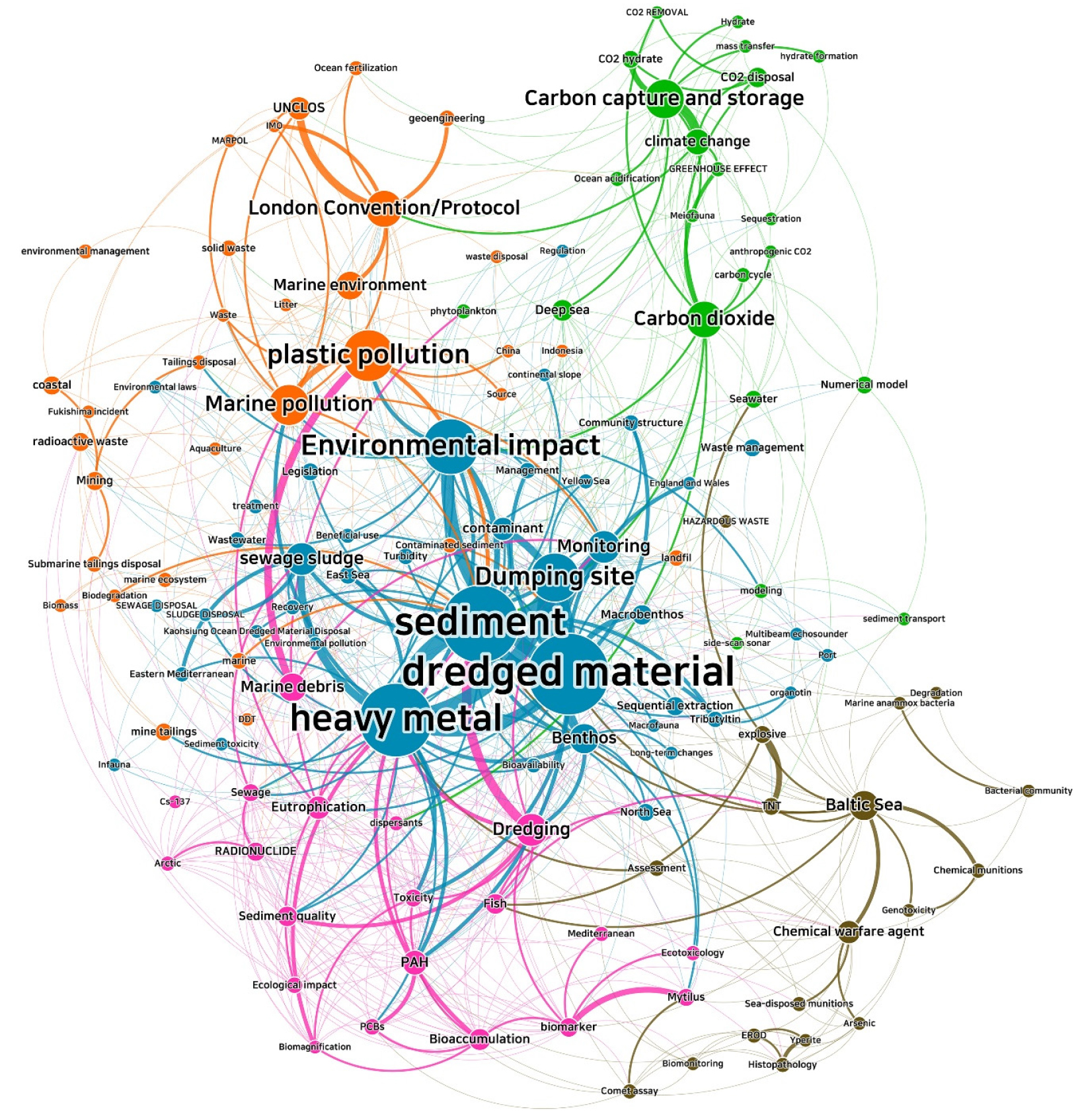
Fig. 5.
Keyword co-occurrence network in ocean dumping-related research. Node size indicates keyword frequency, and edge thickness reflects the strength of co-occurrence. Node color represents cluster membership: Cluster 1 (turquoise), Cluster 2 (orange), Cluster 3 (green), Cluster 4 (pink), and Cluster 5 (brown)
Policy milestones and ocean-dumping research evolution
Since the LC was enacted in 1975, ocean-dumping research has expanded from fewer than 10 publications per year to double-digit output by the early 1980s. Publication activity then plateaued through the 1990s, even after landmark LC resolutions banning industrial- and radioactive- waste dumping (1993–1994), but regained momentum once the LP took effect in 2006 and authorized sub-seabed CCS. A renewed policy focus on plastic pollution and climate-change mitigation (marine geoengineering) in the late 2010s drove output to roughly 60 papers in 2023 and approximately 50 in 2024, the highest levels recorded (Table 7).
Table 7.
Major London Convention/Protocol (LC/LP) milestones and observed research responses (1972–2022)
Keyword-network trends revealed that the traditional clusters sediment pollution and toxicity remained central throughout the five-decade record, whereas policy- responsive clusters increased or decreased in step with LC/LP milestones. Specifically, the policy-focused cluster expanded whenever the treaties’ remit widened (e.g., plastics, radioactive waste), and a distinct CCS/geoengineering cluster emerged immediately after the 2006 CO2-storage decision and the 2013 geoengineering amendment. Conversely, the small military-waste cluster has persisted as a legacy topic, highlighting issues that pre- date the current regulatory agenda.
As shown above, a small group of developed nations still accounts for most output, with recent growth concentrated in East Asia. Research participation from equatorial regions and least-developed states remains minimal, underscoring the need for targeted capacity-building if the LC/LP Strategic Plan’s vision of an inclusive knowledge community is to be realized.
Overall, temporal fluctuations in publication volume, shifts in thematic clusters, and evolving national centrality coincide with major LC/LP milestones, indicating that iterative science-policy feedbacks have steered the development of ocean-dumping governance.
4. Conclusion
Key findings and evidence-based implications
This scientometric assessment of 865 articles (1972–2024) demonstrates that the evolution of ocean-dumping scholarship is closely coupled with successive LC/LP milestones. Although traditional foci on dredged material and sediment toxicity remain central, new clusters such as CCS, marine geoengineering, and plastic pollution surged when the LC/LP framework expanded to regulate these domains. Publication peaks align with the adoption of the 1996 Protocol, the 2006 CCS decision, and the 2013 geoengineering amendment, underscoring the agenda-setting role of international rules. At the same time, broader global environmental developments - such as increasing public awareness of plastic pollution and climate change - have likely contributed to the rise in research on ocean dumping. This suggests that LC/LP policy milestones operated in conjunction with other global drivers to stimulate scholarly output.
Despite overall growth, research capacity remains concentrated in a handful of developed nations, with equatorial and least-developed states underrepresented. In light of this pattern, future LC/LP-related work could examine pathways for more inclusive participation in scientific and deliberative processes and explore how guidance might evolve as new evidence emerges, while assessing capacity needs in under-resourced regions. These are identified here as avenues for subsequent research and policy
Scope and limitations
This study provides an evidence-based mapping of the LC/LP knowledge domain. The proposed indicator suite (research intensity, thematic diversity, and policy coupling) is presented as a conceptual framework that could inform future validation and piloting by competent LC/LP bodies. Its operationalization within performance reviews would require negotiated definitions, longitudinal administrative and monitoring datasets, and alignment with existing IMO reporting procedures-elements that lie beyond the remit and data of this scientometric analysis. We therefore flag these steps as future research and governance tasks rather than prescriptive recommendations.